EN 301 549 · WCAG 2.2 AA
Accessibility Gap Audit
Audit findings that ship as engineering tickets, not PDFs.
See the service →
Gamestorming · MDA · Playtesting
In a facilitated workshop your team builds a small game about your brand. Writing rules forces the decisions a moodboard leaves open: what gets rewarded, what costs something, what is off limits. You leave with a playable game and your brand on one page, in the language of play.
Brands usually describe themselves with adjectives. A game doesn't accept adjectives: it needs rules, rewards and a world, and every one of them is a brand decision.
01
What a game rewards is what a brand cares about. Points for speed or for care? Writing the rule means choosing, not describing.
02
Game designers build mechanics, players feel the result. Brands start from the feeling. The game makes you find the mechanic that causes it.
03
Good small games have one main verb: climb, sail, stamp. “What do people do with us?” is a brand question, and usually the hardest one of the day.
04
A playtest shows what people do, not what they say. Thinking with your hands lowers the bar for everyone in the room.
Who plays, and which format fits.
Discover, rules, world, play & test.
The game, the canvas and the playtest notes.
Pilot price, fixed after the call.
Start small. The half day is the way in; the sprint and the build grow from it.
½ day · Discovery
Discover, rules and world, then a paper prototype. You leave with a filled-in canvas, a played paper game and photo notes. Fits a kick-off, an offsite or a strategy day.
2 days · Discovery Sprint
All five steps. On day two the prototype becomes digital and playable on the island's engine. You leave with a link to a mini game.
4–6 weeks · Build
The prototype becomes your game: for the website, a trade fair, onboarding or recruiting.
The worksheet goes home filled in and works as a brief afterwards. Here is how I filled it in for the island on this site.
| Field | Guiding question | On the island |
|---|---|---|
| Players | Who plays, and what do they really want? | Teams and recruiters who want to see how I work |
| The verb | What do people do with us? One word. | Discover & stamp |
| Goal | When does the player win, and when does the brand? | Every stall found; the brand wins with a conversation |
| Reward | What earns something? That's what we value. | A stamp for every stall you discover |
| Costs & rules | What is scarce, what is off limits? | At most one hint, never in the first 20 seconds |
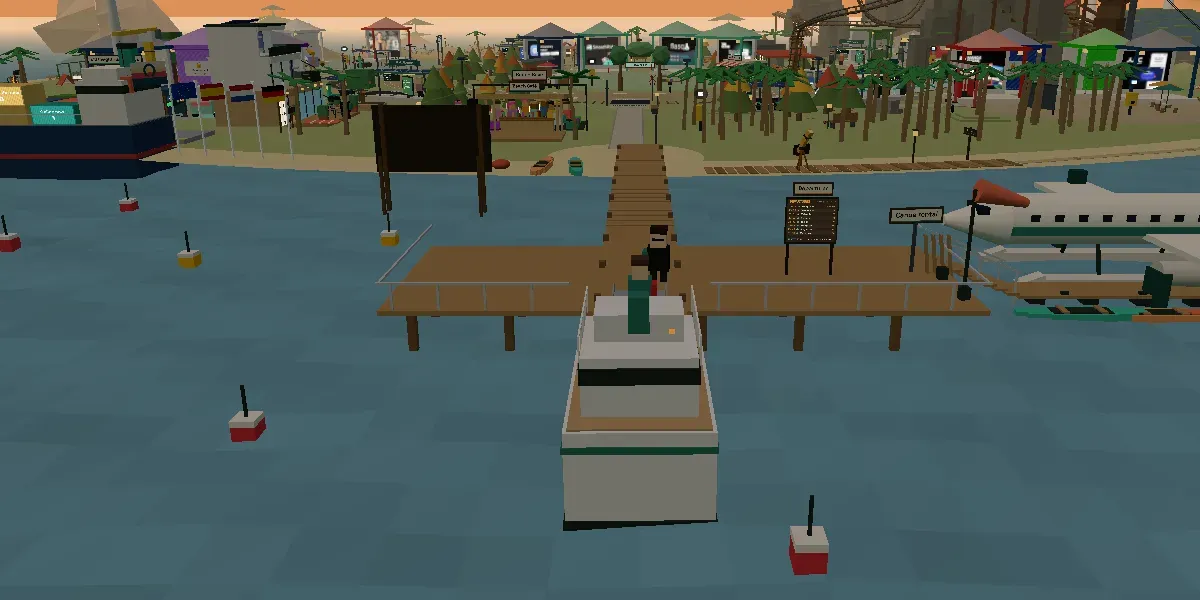
| World & material | Where does it happen, what is it made of, how does it sound? | An island with a pier, market stalls and a campfire |
| Feeling at the end | One sentence players should say. | “Now I know how he works.” |
| The shareable | The moment people pass on. | The fire where a rejection turns into something useful |
Your canvas stays with you. Nothing from the workshop is published.
What teams usually ask first.
Audit findings that ship as engineering tickets, not PDFs.
Interfaces where a human, not the model, holds the final decision.
Cutting page weight and hosting emissions without a design compromise.