Digital Garden
World Cleanup Day - Time To Reflect on The Impact of Consumerism.
A three-day journey through waste collection, decluttering and environmental reflection – from cleaning up Frankfurt to fishing bottles out of Utrecht's canals.

Day 1 - World Cleanup Day
This year I joined World Cleanup Day with my company’s volunteer day program. We ended up cleaning my hometown of Frankfurt for consecutive 8 hours. No photos, no LinkedIn post, just pure state of flow and moments of consternation, reflecting on the sheer scale of our consumerism. Honestly I think every office worker should do this once per year - instead of ordering plastic-wrapped takeaway food to save some minutes in the squeezed-in lunch break between the meetings.
Touch some grass, collect cigarette butts by the riverside - or stuff people decided to throw out of their car window. The waste we decide to collect gives us a moment of reflection - how much effort goes into production, collection and recycling. To me it was a day of mixed feelings - collecting litter in the sun, passing people pledging respect for this one day of cleaning up - but what we collected was just the tip of the iceberg of our very own historical waste footprint. Just imagine the height of the litter you generated in your lifetime.
The good thing: It is in our hands to change it for good.
Day 2 - The Growing Clutter Coffins We Live In
It was Saturday and time to take the #WorldCleanupDay home.
Just recently I came across the concept of generational clutter - the accumulation of clutter passed on generation for generation. The 100 cups or towels you inherit from your family that join the selection of cups you already own etc. - the opposite of intentional consumption.
As a 10-year-old I besought my family to keep my 5 boxes of Playmobil stuff so that one day my kids could play with it.
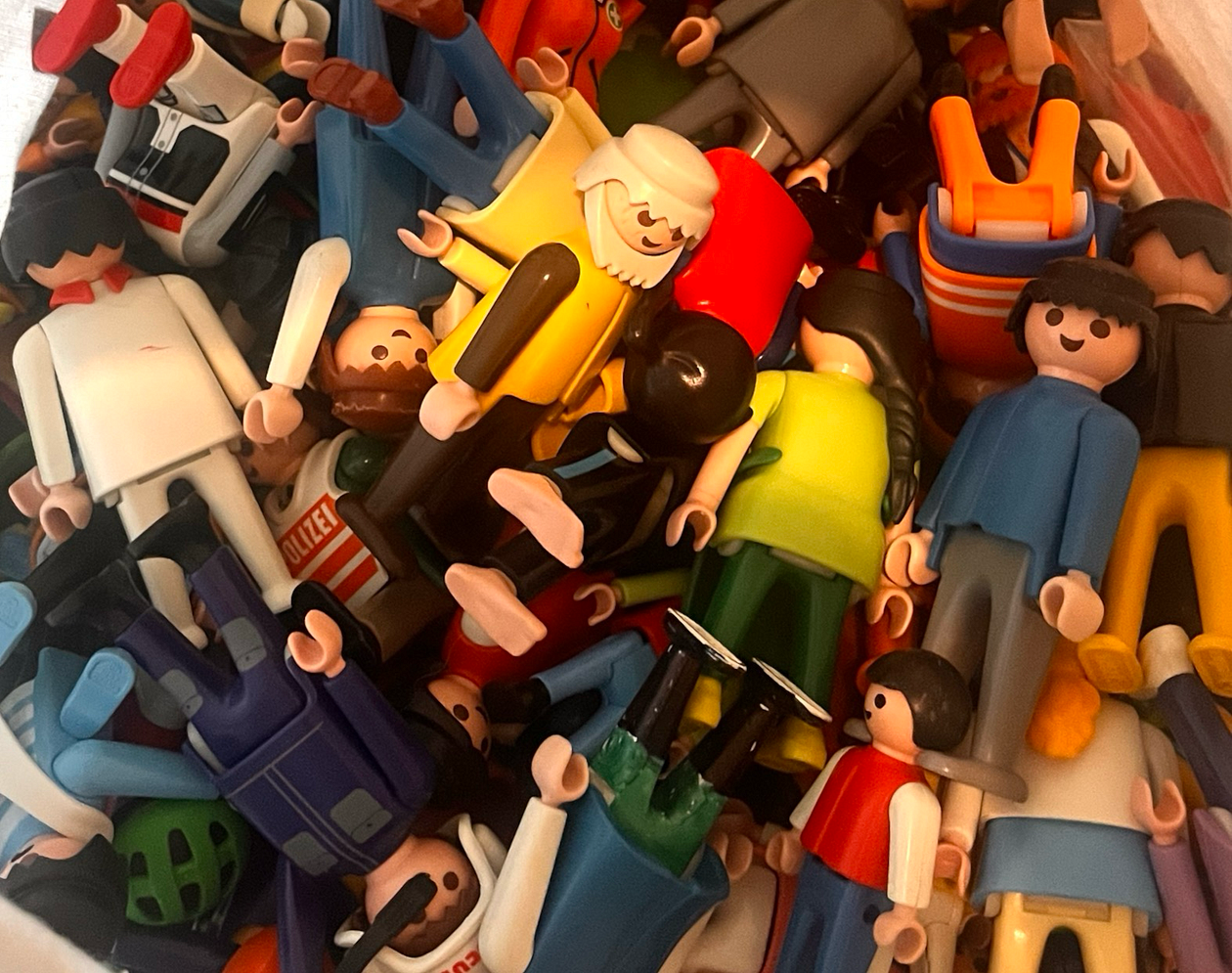
Looking back at it with a rational brain: In the 20 years my toys were stored in boxes, four generations of children could have already played with them.
Of course - there are many more examples to tap into - like the average car standing still for 23 hours a day - and when moving, carrying only about 1.5 people on average.1
Consume first - manage later. It takes almost no time, effort or money to buy something - but nobody at checkout educates you about the real operational cost, lifetime spent decluttering in the end.
I realize this each time I list something on eBay / classified ads. Similarly so, it took me 3 days to categorize, rebuild and bundle up ~80% of the Playmobil toys.
Iterative Waste Disposal #CarryShitOlympics
I wrapped up the day at the local waste dump. After waiting for 30 minutes in a queue of cars (of which 80% loaded same amount or less) I got rid of a good cubic meter of stuff.
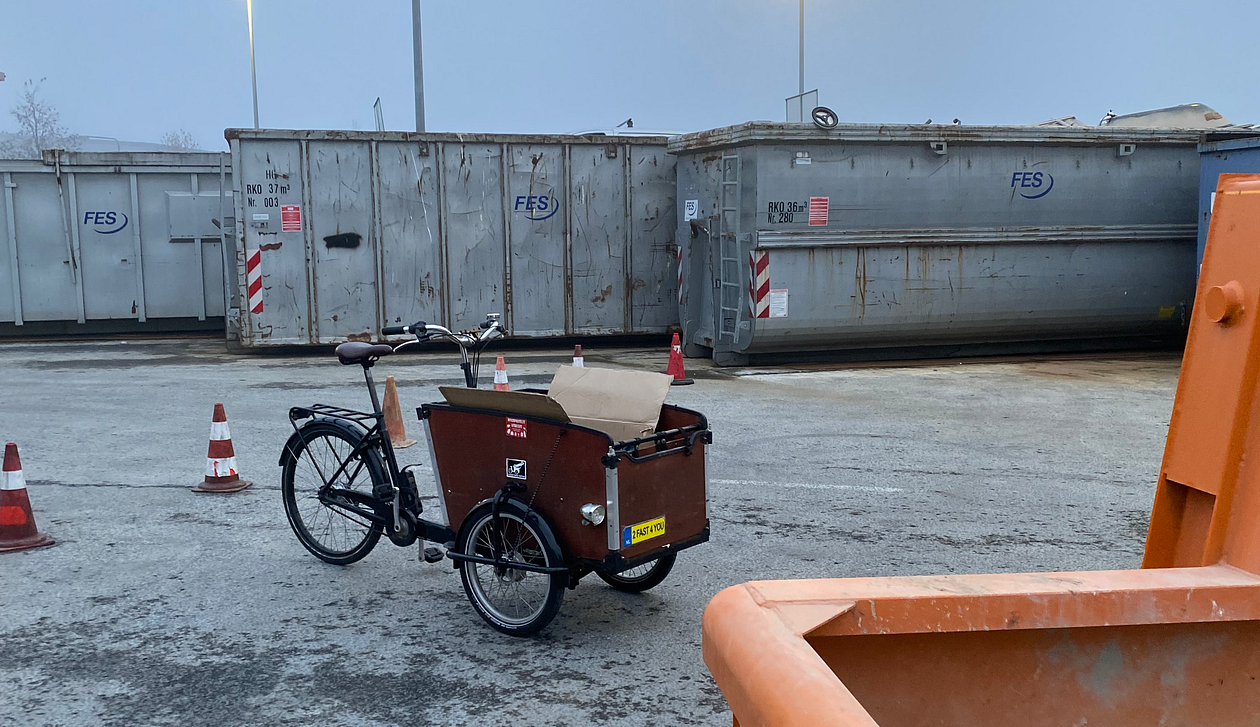
My maximum distance on that thing (I love it, rides like a tank and you can carry people) was 70km, when I moved from The Hague to Utrecht. I truly felt that I moved, appreciated my new home even more.
Riding ultra-light and lubed road bikes for 200km per day, sure - but what about doing the same distance on a fully loaded 3-wheeler cargo bike without electrical assistance?
Let’s talk about contemporary instead of competitive sports: In today’s consumerist world, for the olympic games of 2028 #Olympia2028 or the #TourDeFrance #LaVuelta I would propose adding #CarryShitOlympics as an official discipline. I think it is one of the only possible honest ways of making 1) The result of our consumption more visible and 2) get rid of our waste.
A lot of energy goes into the production of goods - so why not approach the end-of-product lifecycle with a bit more respect - by not adding any more energy consumption to its lifecycle - but instead contributing some physical labour.
Day 3–More Perspectives
I needed a break from arranging Playmobil stuff. The last day made me feel as if I had become a Playmobil toy figure myself (an NPC slave made of plastic), by touching and managing Playmobil-sized coins, tableware, flowers all-day.
I left on a daytrip to my beloved Utrecht in The Netherlands. Some kayaking on a Sunday to calm down, what else.
A message in a bottle? How exciting! Well…
The experiences of my previous day struck me when I intuitively started collecting plastic bottles (- and, a light bulb?) from the canals. 15 Cents of deposit per bottle - and people just throw them in the canal? That’s some A-tier trash - free money! I’m never going to understand that. The most bizarre find I had in the canals of Utrecht on an earlier tour was this mackerel wrapped in plastic. Does this already count as provocative art?
Why - And Where My Journey Started
My motivation in questioning consumerism and becoming more serious about minimalism, I can pinpoint back to two pivotal events.
Event 1: Merging 2 households into one (Physical Clutter = Brain Clutter)
At some point I moved places and suddenly had to deal with a lot of stuff. This got me into peak panic mode. I noticed how the increased occupied physical space took impact on my mental state.
Event 2: Living abroad with just a backpack, laptop and a bicycle
My essence though was: Besides my 8 hours work per day and resumed cooking habit, I had packed days of fun in Valencia - be it pre-work or after-work.
Small amount of things to manage resulted in a free mind.
Coming back to a room full of stuff at home made me wonder what I really missed during that period.
- My wardrobe? Turned out it totally works out to survive on two outfits, 1 t-shirt per day and weekly laundry. I realised that at home I only wore around 10% of my entire wardrobe and became even more selective with the stuff I buy.
- My bookshelf? I completed more books than ever before, just by having them easily accessible on my Kindle
For me, the choice is clear. Let’s ungridlock ourselves from the physical stuff that wants to be managed and thereby keeps us slow and poor.
Footnotes
- Mobilität in Deutschland 2017 (BMVI/infas): an average car is driven about 45 minutes a day, i.e. parked for roughly 23 hours (summary on basicthinking.de). Average car occupancy is about 1.5 people, unchanged in MiD 2023 (MiD 2017 Kurzreport, p. 7; MiD 2023 Kurzbericht, p. 4). ↩